



Hyvä has grown from a paid alternative theme into a full frontend ecosystem for Magento Open Source and Adobe Commerce. The core theme became free and open source in late 2025, and as of September 2026, is used by over 7,700 Magento stores.
Merchants evaluating a Magento redesign or a Magento 2.4.9 upgrade in 2026 ask three practical questions: what does Hyvä cost now, does it really pass Core Web Vitals, and which checkout option fits an existing store.
Our team has implemented Hyvä on real Magento and Adobe Commerce projects, including module compatibility work and checkout migrations, so we can answer all these questions. This article also covers Hyvä’s 2026 pricing, performance, compatibility, and checkout options, and shares what we learned building with it, including where it still falls short.
Table of Contents:
Hyvä Overview
What’s New in 2026
Main Advantages of the Hyvä Theme
Hyvä Issues and Trade-Offs
Hyvä Page Builder
Hyvä Compatible Extensions and Module Adaptation
Hyvä Checkout Options in 2026
Hyvä Theme License and Product Costs
Comparative Analysis: Hyvä vs. The Alternatives
Decision Matrix: Luma vs. Hyvä
Performance Benchmarking Checklist for Magento Stores
The BelVG Experience with Hyvä Built
Summary
Hyvä Overview
Released in February 2021, the Hyvä theme was meant to be an alternative to Single Page Application (SPA) and headless commerce. Its creators believe that not every ecommerce store needs a fully JavaScript-driven, headless architecture. And Magento’s default themes, especially Luma, carry a lot of unnecessary frontend weight.
To address it, they created Hyva. This theme removes RequireJS, jQuery, KnockoutJS, and LESS, technologies that can slow down Magento’s frontend. Hyva’s developers replaced them with Tailwind CSS and Alpine.js, two tools borrowed from the Laravel ecosystem.
Tailwind ships utility classes so developers write less custom CSS from scratch. Alpine.js is a lightweight alternative to KnockoutJS with a simpler syntax. Together they produce a codebase that is smaller and easier to read than Luma’s.
As of 2026, Magento Open Source and Adobe Commerce 2.4.9 (released May 12, 2026) are the current stable releases. Hyvä supports Magento 2.4.4 and later, so most active Magento installations can run it.
To better understand how Hyvä differs from the default Magento Luma theme, we can compare their technical stacks, performance, and development speed.
| Feature | Luma | Hyvä Theme |
| Tech Stack | RequireJS, KnockoutJS, jQuery, LESS | Alpine.js, Tailwind CSS, Magewire |
| Performance | Low out of the box, needs heavy optimization | Strong starting point for PageSpeed performance |
| Resource Load | Loads ~200+ JS/CSS files (1.5MB+) | Loads ~2 JS/CSS files (0.2MB) |
| License Cost | Free | Free (core theme), paid add-ons available |
| Development Speed | Slower due to complex file structure | Faster due to 30-50% simplified frontend complexity |
| Target Audience | Low budget / Small catalog | Performance-focused / Scaling merchants |
Methodology note: data above reflect typical demo comparisons reported by Magento agencies and Hyvä’s own documentation. Real-world numbers may vary depending on hosting, images, and third-party scripts. For more details, see the Performance section below.
What’s New in 2026
Hyvä in 2026 expanded beyond its original frontend theme. The ecosystem has added more tools for store management, content, media, checkout, and Adobe Commerce.
For merchants, the most relevant changes are:
- Hyvä Commerce 1.2 adds a configurable admin dashboard with sales, content, and Core Web Vitals data. Its new Media Optimization suite can automatically convert images to WebP or AVIF and resize them before they reach the storefront to improve page load.
- Hyvä CMS now includes features like drafts, version history, scheduling, image editing, and AI-powered translations through OpenAI, Gemini, and DeepL. It can reduce manual work for stores with multiple languages.
- Hyvä Checkout has received payment API improvements, a backport module for stores that cannot upgrade Magento right away, better multi-tab stability, and small UX improvements such as a back-to-cart button and pre-filled customer details. It also supports Tailwind v4.
- Hyvä Theme continues to improve storefront performance, accessibility, and search visibility. Recent updates include richer product structured data and smoother configurable product selection.
- Adobe Commerce B2B stores get better support through Hyvä Enterprise. The latest updates add compatibility with Adobe B2B 1.5, including Negotiable Quote templates, drafts, and duplication, plus Gift Registry support.
Some features are still on the roadmap, including Linked Products, Category Merchandising, more CMS tools, Magewire v3 support, Google Autocomplete, and further checkout improvements.
Main Advantages of the Hyvä Theme
Hyvä is often chosen for three main reasons. It can simplify development, deliver high performance, and provide a cleaner, more modern frontend architecture that’s easier to maintain and scale.
Let’s examine these advantages in more detail, starting with the lower entry level for developers.
Low Entry Level for Developers
Hyvä uses tools that Magento developers already know, like PHP and XML. So it’s easy to get started. The main adjustment is learning Hyvä’s approach to frontend development, especially Tailwind CSS and Alpine.js.
Hyvä also ships Magewire, a port of Laravel Livewire, which lets developers with strong PHP skills build dynamic, interactive storefront features without writing complex JavaScript. It makes the transition from traditional Magento themes to Hyvä much more frictionless and intuitive.
We asked our frontend expert about working with Hyvä for Magento frontend development:
The main issue with Hyvä is switching from how Magento handles styles and JS to how Hyvä does it. The inner part is still Magento. But when you get how it works, development becomes faster and easier.
Denis Gurianau, Senior Frontend Developer at BelVG.
Because developers don’t have to ship megabytes of JavaScript, the theme’s modular architecture provides a more efficient code structure that is easier to navigate. As a result, the team spends less time wrestling with complex dependencies and more time building new features.
Faster Development Speed
Developers spend some time getting used to Tailwind CSS and Alpine.js when they first work with Hyvä. But the Hyvä UI Library makes it easier and less time-consuming. It provides ready-made components such as headers, footers, and product galleries, so developers can adapt existing pieces instead of building everything from scratch.
The first Hyvä project usually takes about as long as a similar Luma project. Hyvä says mid-sized projects often take 6-12 weeks, while larger and more complex stores can take 3-4 months. Later projects can take less time once the development team has Hyvä experience.
However, when comparing agencies, ask how much hands-on experience their Hyvä team has. Their hands-on experience is a better guide to your project timeline than a general industry estimate.
Hyvä Theme Performance and Core Web Vitals
One of the main reasons merchants choose Hyvä is performance. Magento’s default Luma frontend can be slow, and getting consistently good Core Web Vitals often requires significant optimization work. A headless or PWA storefront can also deliver strong results, but it usually adds more technical complexity.
The Hyvä theme gives an alternative. In clean demo setups, Hyvä often achieves near-perfect PageSpeed scores and can pass Core Web Vitals (LCP, INP, CLS) with proper configuration. However, in real stores, results depend on images, third-party scripts, hosting, and checkout setup.
Recent benchmarks suggest that approximately 50% of Hyvä stores pass Core Web Vitals globally. In comparison, Luma or Single Page Application (SPA) setups often require more customization to reach similar performance levels.
Note:As of 2026, Core Web Vitals include LCP (≤ 2.5s), INP (≤ 200ms), and CLS (≤ 0.1), with INP replacing FID in 2024 as the main interaction metric. INP measures overall page responsiveness across the entire page visit. It’s a more representative signal of real user experience, and one that’s harder to game with a fast-but-misleading first click.
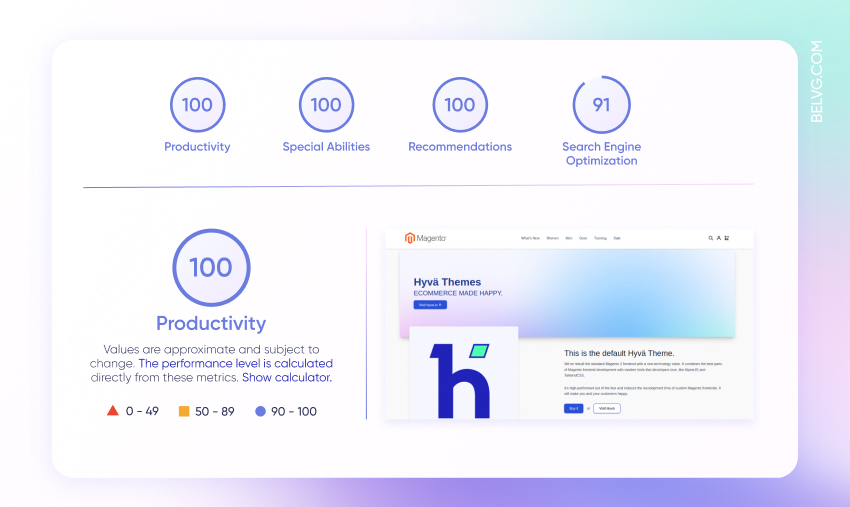
Hyvä demo Google PageSpeed results in clean demo setups
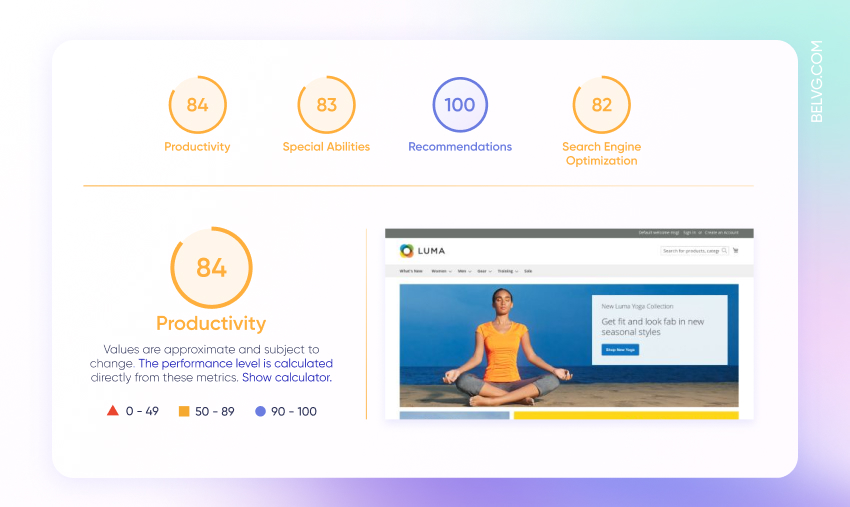
Luma demo Google PageSpeed results
Hyvä has a much smaller frontend footprint than Luma. It relies on two main frontend dependencies, Alpine.js and Tailwind CSS, while Luma has more than 200 dependencies. Hyvä also reduces the number and size of resources that browsers need to load. It gives a store a strong performance baseline, especially for INP, where heavy JavaScript can keep the main thread busy and delay user interactions.
Your results still depend on what you add to the store. Heavy tag managers, chat widgets, analytics tools, and other third-party scripts can add main-thread work and hurt INP. Hyvä’s own documentation recommends deferring these scripts where possible.
With less frontend code to load and execute, Hyvä can improve loading speed. Besides, features such as product galleries, configurable products, price updates, and wishlists can become interactive sooner. The exact result still depends on how each feature is implemented.
Hyvä Issues and Trade-Offs
Hyvä can improve Magento performance, but switching to it takes planning. Here are the main costs and challenges you are to keep in mind:
- Some extensions need extra development. If an extension relies on Magento’s Luma frontend, it may need a Hyvä compatibility layer. It can take more development work.
- Your team needs to learn Tailwind and Alpine.js. Developers who know Magento but have not used these modern technologies will need time to adjust. The first Hyvä project may take about as long as a Luma project. Later projects can be faster once the team has experience.
- Existing CMS content may need to be rebuilt. Landing pages, category descriptions, and other CMS content that uses Luma-specific styles may need manual changes. It can take significant time on stores with a large amount of existing content.
- The free theme does not mean a free storefront. Hyvä’s core theme is free, but you may still need paid products for features such as checkout, B2B functionality, or other parts of the store. See the section about license cost below.
- Custom React checkout needs React skills. If you plan to customize Hyvä React Checkout beyond its standard features, your team needs React experience. This work may require additional developers or outside help if your Magento team does not work with React.
These are not reasons to avoid Hyvä. They are costs and project requirements to plan for before migration. Include them in your timeline and budget from the start.
Hyvä Page Builder
Hyvä supports Magento’s standard Page Builder. Hyvä provides the templates and frontend styling needed to render Page Builder content with its Tailwind CSS and Alpine.js-based frontend. You can therefore use existing Page Builder content on a Hyvä store without replacing Magento’s Page Builder.
There is one important caveat. Page Builder content that relies on custom CSS, third-party content types, or heavily customized layouts may need some work after a Hyvä migration. The content itself can carry over, but its appearance may need adjustments for the new frontend.
For a large store, plan a QA pass for your main CMS pages, landing pages, and category content. It serves to catch visual issues before the new theme goes live.
There is no separate “Hyvä Page Builder” product. It is Magento’s existing Page Builder with Hyvä’s frontend support and styling. Hyvä also offers a separate Hyvä CMS product, but it is optional and can coexist with Page Builder.
Hyvä Compatible Extensions and Module Adaptation
By 2026, the Hyvä extension ecosystem has matured significantly since its theme’s early days. According to Hyvä’s ecosystem pages and partner reports in 2026, there are now over 1,000 extensions that work with Hyvä. But not all of them are native. Many use dedicated compatibility modules to adapt frontend code to Alpine.js and Tailwind CSS. You can see the full list in the official Hyvä Compatibility Library.
A big change is that Hyvä Theme became open source in late 2025. It has led to many free, community-made compatibility patches on GitHub. While some modules still need work to fit Hyvä, you rarely have to pay for full custom development from scratch anymore.
Hyvä compatibility with modules typically falls into three categories:
- Incompatible: modules that do not align with Hyvä.
- Natively compatible: modules without frontend components, or ones that don’t rely on Magento’s default JS frontend.
- Compatible with additional compatibility modules: modules that need a dedicated add-on to substitute incompatible parts, typically rewritten JS scripts and PHTML templates.
Although it’s recommended to check module compatibility, most Magento extensions don’t need PHP/backend changes to work with Hyvä. Only the frontend rendering layer needs adapting, which is usually a smaller share of a module’s total code.
For example, on one of our own projects, making Mageplaza Reward Points compatible took only a few hours. The module had minimal JavaScript and mainly needed Tailwind styling adjustments.
Besides, many agencies now use AI-assisted tools to convert old Luma templates and Knockout.js scripts into Alpine.js and Tailwind CSS. What used to take a full day can now often be done in just a few hours.
Hyvä Checkout Options in 2026
Choosing a checkout for your Hyvä store comes down to two practical questions: does it support your payment and shipping providers, and how much custom UX do you need?
The good news is that Hyvä Checkout has broad payment and shipping integration coverage. Major providers such as Stripe, Adyen, PayPal, Mollie, Braintree, Klarna, Apple Pay, and Google Pay have vendor-supported or well-documented integrations. At the same time, regional and less common gateways may still require custom development.
Before committing to any option, check the official Hyvä Checkout integration list to validate your specific stack.
There are three main options:
Hyvä Checkout is built natively for Hyvä and uses the same technology stack, such as AlpineJS, TailwindCSS, and Magewire PHP. Because most of the checkout logic runs on the backend, developers don’t need to rely on a large amount of JavaScript for customization. It’s designed for speed and conversion, with a clear mobile-performance edge over Magento’s default checkout. Speed matters, because a faster checkout can improve customer satisfaction and reduce cart abandonment.
- Best for: stores whose payment and shipping providers are already supported and that want a fast, maintainable checkout without building from scratch.
- Check first: confirm that your exact PSP, payment methods, shipping providers, and required checkout extensions are on Hyvä’s supported list.
Luma Fallback Checkout keeps Magento’s default checkout for specific flows while running Hyvä for the rest of the store. It can be the easiest option when a store relies on legacy checkout extensions or payment providers that are tightly coupled to Luma’s JavaScript layer.
The trade-off is that part of your customer journey stays on the heavier Luma stack. It can affect page performance and create a less consistent experience between the storefront and checkout.
- Best for: stores with complex legacy checkout logic, uncommon regional providers, or many existing modules that depend on Luma’s checkout.
Hyvä React Checkout is an open-source checkout solution built with React. The community maintains it, and it is separate from the commercial Hyvä Checkout product.
It can be used as an alternative checkout for Magento stores, including stores using the Hyvä Theme. However, it is not an official Hyvä product and does not receive the same level of support as Hyvä Checkout.
Common payment providers, including PayPal Express, Stripe, and Amazon Pay, are already supported. For less common or regional providers, you may need additional development work. Effort and cost depend heavily on your specific payment, shipping, business logic, and checkout UX requirements.
- Best for: teams with real React expertise that need a checkout experience beyond what a configurable solution can provide.
| Hyvä Checkout | Luma Fallback | Hyvä React Checkout | |
| Speed | Excellent | Moderate | Excellent |
| Integration coverage | Broad, check the official list | Widest for legacy modules | Depends on your build |
| Customization | High | Limited | Maximum |
| Dev effort | Low to medium | Low | High |
| Cost | €1,000 one-time
+ optional ~€250/year support |
Included with the theme | Build cost only |

Magento 2 Custom Development
Make you website stand out from your competitors with custom Magento development
Visit the pageHyvä Theme License and Product Costs
If you want to use Hyvä for your Magento store, the core Hyva theme is free and open-source. Since November 10, 2025, there is no license fee for the theme itself. You can access the foundational code and start working with it.
It lowers the software cost of adopting Hyva. However, several products in the Hyvä ecosystem are commercial and require a separate license.
| Product | What it is | 2026 pricing |
| Hyva Theme | Free, open-source frontend for Magento | Free |
| Hyvä UI | Library of prebuilt UI components | €250 one-time |
| Hyvä Checkout | Fast, optimized checkout for Magento | €1,000 one-time + optional €250/year support or multi-year bundle |
| Hyvä Commerce | An all-in Hyva suite for Magento Open Source (Theme + Checkout + UI + CMS + tools) | €3,000/year |
| Hyvä Enterprise | Full Hyva suite for Adobe Commerce (B2B, Live Search, Recommendation, CSP, etc) | €7,500 first year, then €5,000/year, or ~€27,500 for 5 years |
Prices are indicative and may change. Conform to current terms on hyva.io or with your Hyva partner.
You might ask: “If the Hyva theme is free, why buy the paid add-ons?” Let’s break down what these products are about.
Hyvä UI
Hyvä UI is a library of pre-built website components, such as menus, product sliders, buttons, forms, and other common interface elements. Developers can use these ready-made components instead of building every element from scratch.
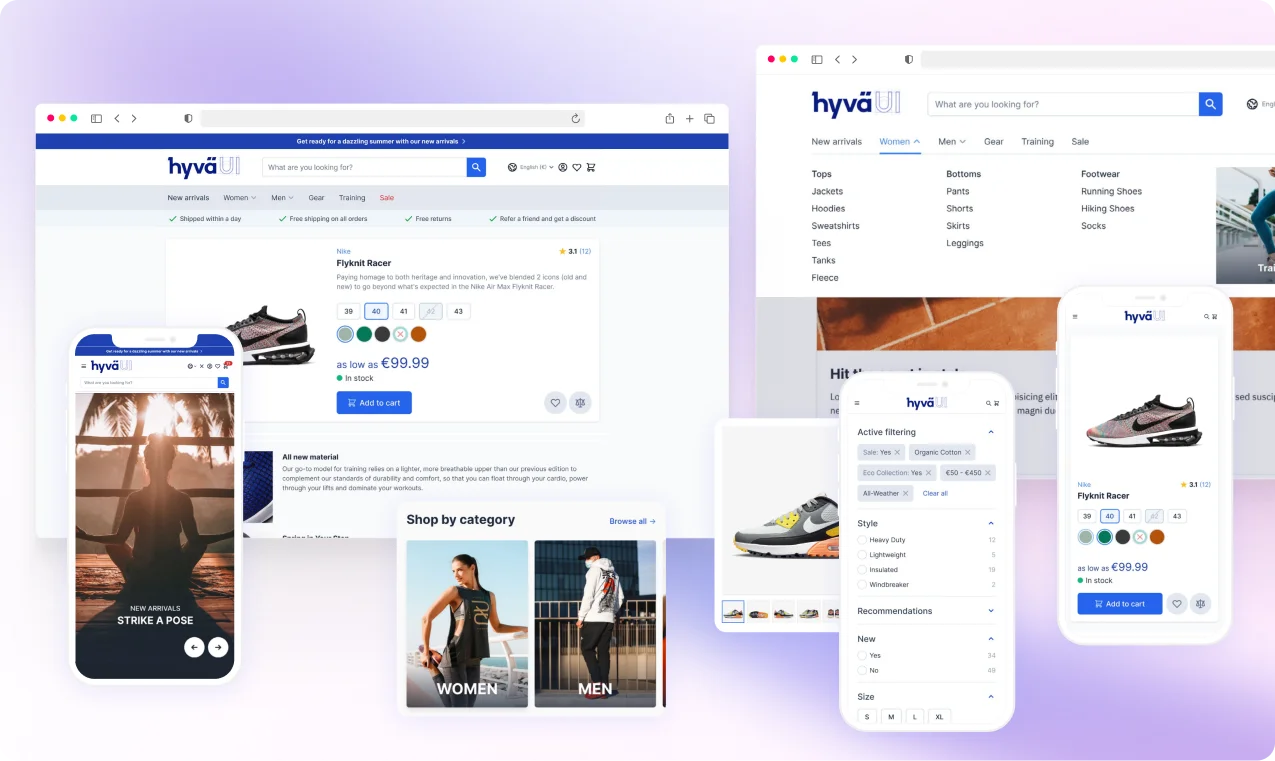
Business benefit:
- Your site looks consistent and professional, while custom styling still lets you preserve your brand’s identity and follow the same design rules.
- Development is faster and less expensive because the core elements are already built and optimized.
- Future updates or redesigns are easier to implement, since everything is modular and standardized.
- Your store performs better, as the components are optimized for speed and modern web standards.
Hyvä Checkout
The checkout is the most critical part of your online store. If it’s slow, confusing, or buggy, customers may abandon their carts, and you lose sales. Hyvä Checkout solves this. It gives you a fast, ready-to-use checkout system.
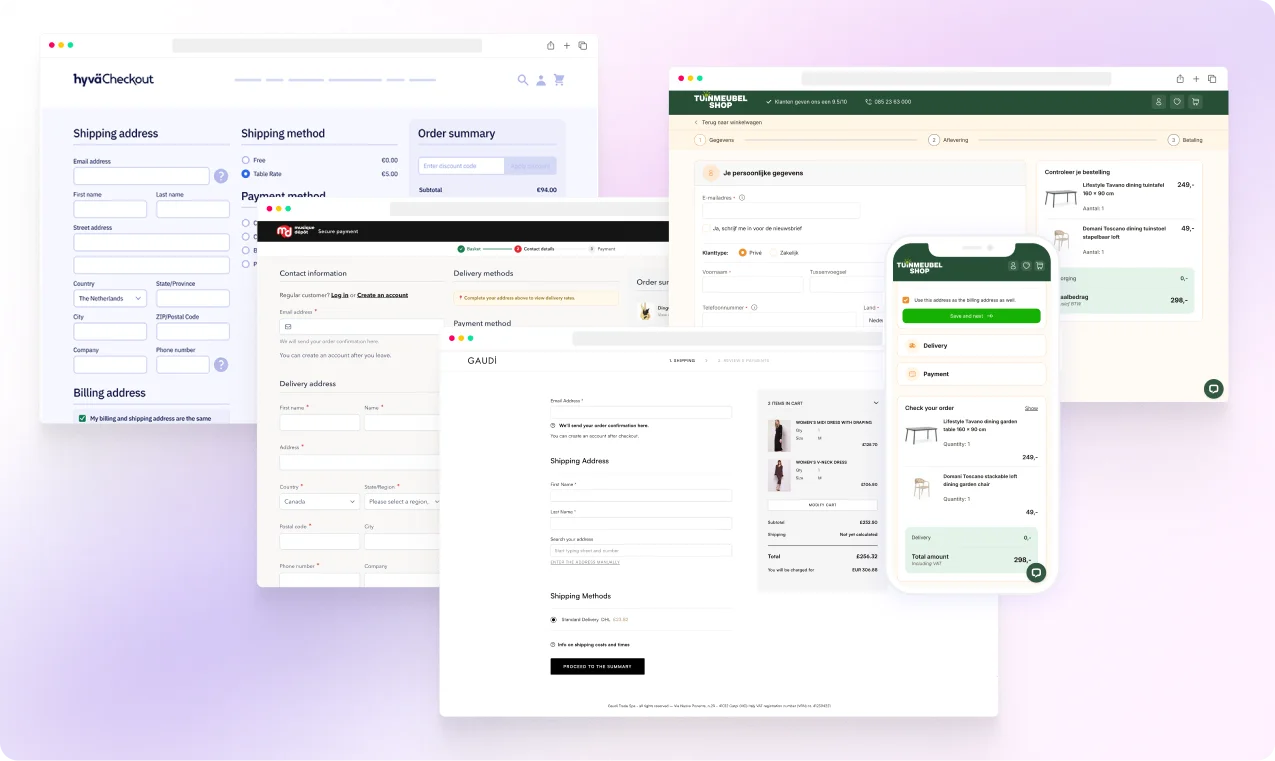
Business benefit:
- Customers can complete purchases quickly and easily, reducing cart abandonment.
- Your store stays up-to-date and secure if you continue updates after Year 1.
- You save development time, since you don’t need to build or customize the checkout from scratch.
- It’s scalable, so it can handle more traffic and orders as your store grows.
Hyvä Commerce
Hyvä Commerce is an all-in-one suite for Magento Open Source. It combines the Hyvä Theme, Hyvä Checkout, Hyvä UI, CMS functionality, and other Hyvä tools in one package.
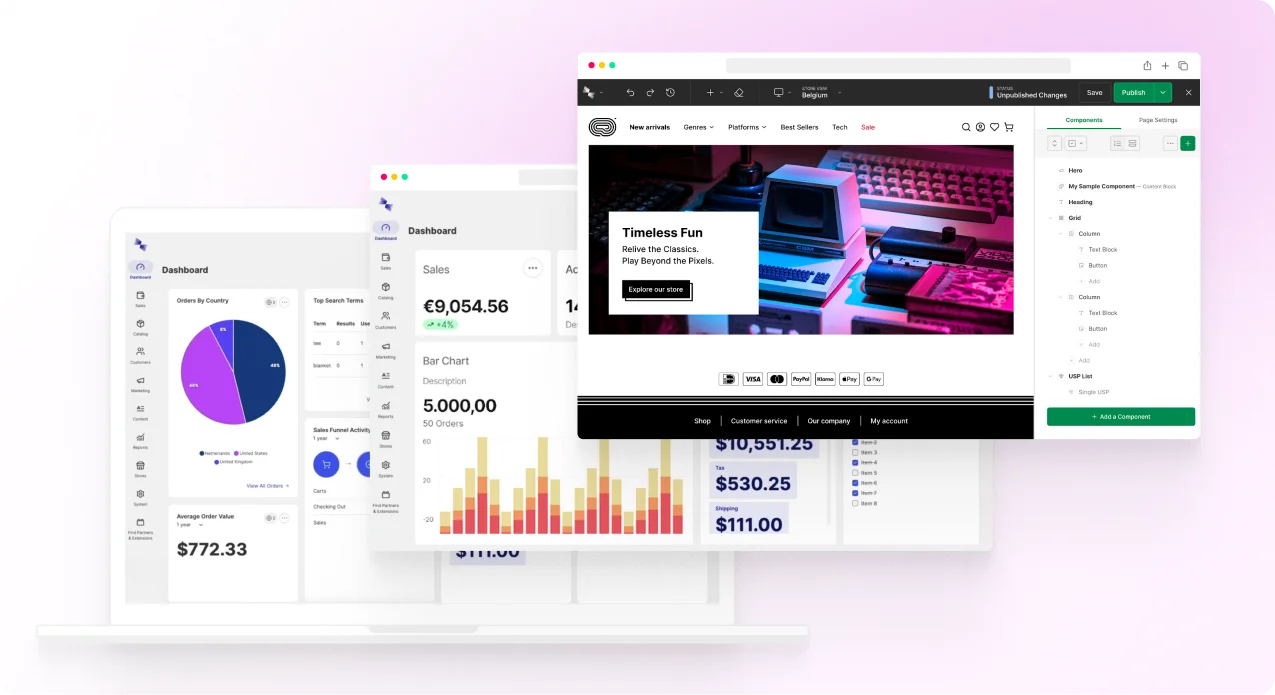
It makes sense for merchants who need several Hyvä products rather than buying them separately.
Hyvä Enterprise
Hyvä Enterprise is the full Hyvä suite for Adobe Commerce. It adds support for Adobe Commerce features, Adobe Commerce B2B, and selected Adobe services.
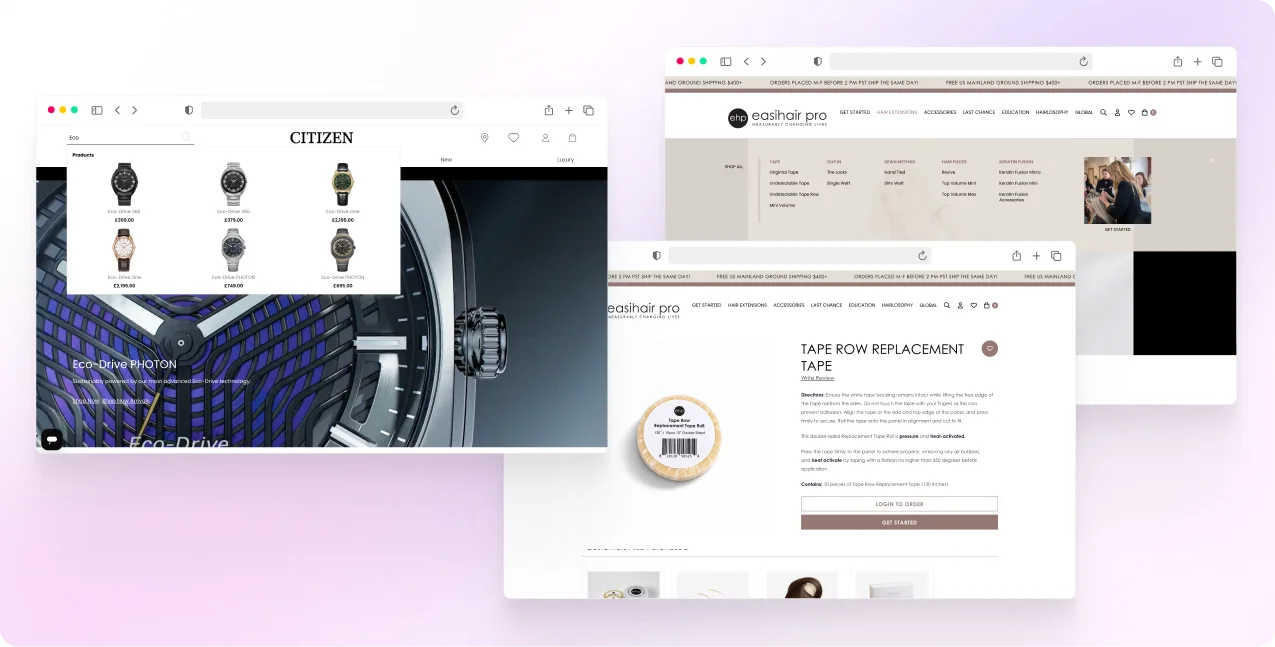
It is designed for larger stores that need Adobe Commerce functionality while using the Hyvä frontend.
Business benefit:
- You keep all the enterprise-level tools your business needs.
- Your site stays fast and efficient even with complex workflows.
- You avoid technical conflicts between Hyvä’s fast setup and Adobe Commerce’s advanced modules.
- It’s easier to scale your store, manage large product catalogs, and handle many customers without slowing down.
What Does a Hyvä Migration Really Cost?
With a commercial license including Checkout, Enterprise, or Commerce, you get:
- Unlimited updates as long as your support subscription is active
- Access to the Private Packagist and Hyvä GitLab
- Immediate access to third-party compatibility modules
- Premium support and community access to the Hyvä Slack
However, the software license is only part of the budget.
Moving an existing Magento store to Hyvä requires frontend development work. Your team may need to rebuild templates, adapt extensions, replace parts of the existing frontend, test third-party integrations, and optimize the new implementation.
For this reason, Magento development work will often cost more than the Hyvä license itself.
Hyvä can reduce the amount of frontend technology you need to maintain. It does not remove the work required to adapt an existing store to a new frontend.
Comparative Analysis: Hyvä vs. The Alternatives
| Feature | Magento Luma (Default) | Headless PWA (e.g., PWA Studio) | Hyvä Theme |
| License Cost | Free | Free | Free |
| Implementation Cost | Low | Very High | Medium |
| Development Time | Fast / medium | Medium / 6-12 months | Fast / 3-4 months |
| Performance | Poor / often failed CWV | Excellent | Excellent / typically green CWV |
| Tech Stack | RequireJS, jQuery, Less | React/Vue, GraphQL, API | PHP, Alpine.js, Tailwind |
| Infrastructure Cost | High | High | Low |
| Complexity | Medium | High (distributed systems) | Low (monolithic simplicity) |
A frontend rebuild is a real budget item, but it can pay back through several channels:
- Lower ad costs. Faster landing pages can contribute to better Google Ads Quality Scores, which may reduce cost per click.
- More completed purchases. A faster, less frustrating checkout can reduce abandonment. Measure this against your own conversion and checkout data rather than assuming a fixed improvement.
- Lower hosting costs. A lighter frontend can reduce server workload and may let you run the store on a smaller hosting plan.
The actual return depends on your organic traffic, ad spend, conversion rates, hosting setup, and your current frontend performance.
Decision Matrix: Luma vs. Hyvä
Choosing between the default Luma theme and Hyvä depends heavily on your specific business goals, budget, and current technical debt. We have broken down the ideal use cases to help you decide.
Choose Hyvä Theme if:
- You need to pass Google’s Core Web Vitals to maintain search rankings and want green PageSpeed scores (90+) on mobile.
- You need a lightning-fast interface to reduce bounce rates on mobile devices.
- If you are upgrading to Magento 2.4+ or planning a design refresh, starting with Hyvä offers the best ROI and future-proofs your technology stack.
- You are tired of the complex Luma stack (RequireJS, Knockout) and want a cleaner codebase that is easier and faster for developers to maintain.
When Hyvä may not be the right fit:
- You rely heavily on Luma-specific extensions. If many of your extensions have no Hyvä compatibility module and you cannot budget for custom compatibility work, the migration may become too expensive.
- You need an installable PWA or offline functionality. Hyvä is not designed for PWA-style offline experiences. A headless setup or PWA Studio is a better fit for this use case.
- You want a React-based custom checkout. If your checkout requires a heavily customized React architecture and your team has no React expertise, Hyvä Checkout may not match your requirements.
- Your store is small and already performs well. If the expected performance gains are unlikely to offset the migration and development costs, a Hyvä migration may not make financial sense.
The Verdict: If you are sticking to a strict budget and rely on many legacy extensions, Luma remains a viable starting point. However, if you are looking to scale, improve mobile conversions, or are already planning a redesign, Hyvä pays for itself through improved performance and lower maintenance costs over time.
Develop your Hyvä store with BelVG. We have experience implementing Hyvä and working with module compatibility for it.
Performance Benchmarking Checklist for Magento Stores
Before implementing or evaluating a frontend solution like Hyvä, use this checklist to measure, optimize, and monitor store performance.
1. Google PageSpeed Insights
- What to do: Test both desktop and mobile scores. Track Core Web Vitals: LCP, INP, CLS.
- Tools: Google PageSpeed Insights, Chrome DevTools Lighthouse.
- How-to:
- Enter your URL in PageSpeed Insights.
- Review scores and Core Web Vitals metrics.
- Note recommendations for improvement (e.g., reduce render-blocking JS, optimize images).
2. Frontend Load Time
- What to do: Measure full page load, Time to Interactive (TTI), and speed of key pages (homepage, category, product, checkout).
- Tools: GTmetrix, WebPageTest, Chrome DevTools Performance tab.
- How-to:
- Load the page in GTmetrix or WebPageTest.
- Compare metrics with baseline (existing Luma or previous theme).
- Identify slow-loading scripts or elements that delay TTI.
3. Resource Usage
- What to do: Track the number of JS/CSS files and total page weight. Identify heavy or redundant scripts.
- Tools: Chrome DevTools Network tab, WebPageTest waterfall charts.
- How-to:
- Open the Network tab in Chrome DevTools.
- Reload the page and check JS/CSS requests and file sizes.
- Flag files >100KB or redundant libraries (e.g., multiple JS frameworks).
- For deeper debugging, you can also use Magento’s developer mode to inspect frontend requests and errors.
4. Checkout Performance
- What to do: Evaluate load time and responsiveness of checkout pages. Test interactive elements and multi-user load.
- Tools: Chrome DevTools, GTmetrix, Loader.io (or any load testing tool).
- How-to:
- Measure page load and TTI for the checkout.
- Click through add-to-cart, payment selection, and shipping options.
- Simulate multiple concurrent users with a load testing tool.
5. Real-World User Metrics
- What to do: Track session duration, bounce rate, and conversion rate before and after optimizations.
- Tools: Google Analytics 4, Hotjar, Matomo.
- How-to:
- Set up GA4 to monitor customer engagement on key pages.
- Compare metrics before and after frontend changes.
- Identify pages where performance correlates with higher bounce rates.
6. Scalability & Maintainability
- What to do: Ensure the theme is modular, new modules integrate efficiently, and performance persists over updates.
- Tools: Magento Admin, code review, automated testing tools (MFTF, PHPUnit).
- How-to:
- Review the theme structure for reusable components and modular layouts.
- Test module integration on the staging environment.
- Document performance before and after updates to track changes.
Tip: Repeat this checklist regularly when implementing new themes or frontend optimizations. Focus on metrics that impact user experience and conversions, not just raw speed numbers.
The BelVG Experience with Hyvä Built
The client’s store faced performance and theme stability issues and required an upgrade to the latest Magento 2.4.5 available at the time. Hyvä was selected to improve frontend speed, simplify maintenance, and support future scalability.
Our team undertook these tasks & challenges:
- Upgrade Magento while preserving existing functionality
- Ensure modules were fully compatible with Hyvä
- Integrate a reliable checkout solution
- Migrate styles and interactive elements to TailwindCSS and AlpineJS
Solutions & Implementation
- Replaced incompatible modules where possible and developed custom patches for essential modules, including Mageplaza Reward Points
- Used a Luma fallback with Amasty One Step Checkout to maintain payment and shipping functionality
- Implemented the Hyvä theme with TailwindCSS and AlpineJS, keeping block layouts and PHTML templates consistent
Results & Metrics
- Google PageSpeed: Improved from 60-70 to 85-95 on desktop
- Frontend performance: Faster, lighter, and easier to maintain
- Development efficiency: Streamlined workflows and reusable components reduced future coding effort
Key Takeaway
Hyvä improved site performance and maintainability and provided a scalable frontend foundation. Module and checkout challenges were addressed without affecting core functionality, demonstrating a practical approach to modernizing stores.
Summary
Based on our experience, the Hyvä theme is what it claims to be. It’s a fast, easy-to-use theme that still has checkout and compatibility issues. But it offers perks in website performance and customization.
Hyvä is a reasonable choice for web development, migration projects, or when addressing performance issues. However, it is still unclear whether it is a good idea to migrate a Magento website with hundreds of CMS pages to Hyvä. The process of changing styles to Tailwind can be a significant task.
Develop you Hyvä store with BelVG
We have experience implementing Hyvä and work with module compatibility for it
Request Hyvä development cost