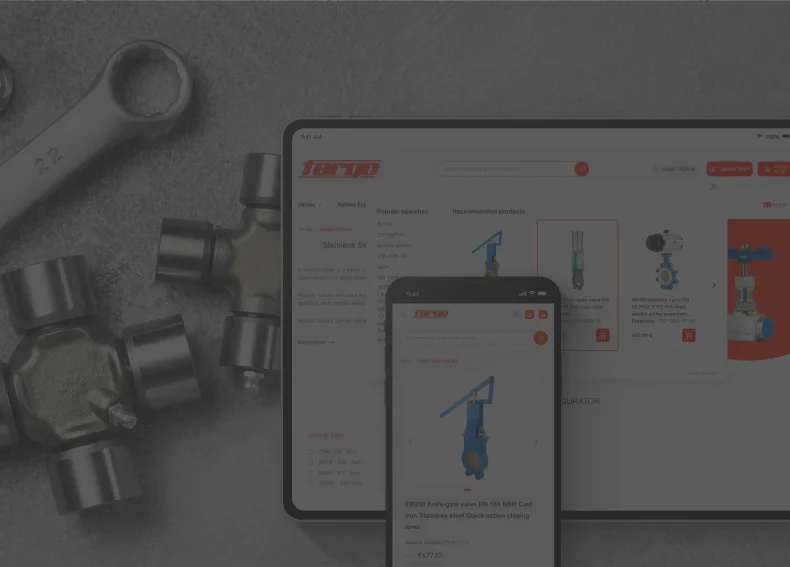
Shopware | UX Audit & Development | Consumer Electronics
Ecommerce UX Audit for Exxatron: A Shopware Case Study
What We Did for Exxatron
BelVG has been collaborating with Exxatron since early 2024. Our services included Shopware upgrades and development, user experience audits, storefront improvements, and website optimization. After upgrades, we fixed a marketplace-integration delivery-address bug and provided ongoing support. The UX audit process combined usability reviews, performance checks, competitor research, and practical recommendations based on the store’s user experience.
About Exxatron
Exxatron sells high-value consumer electronics and home appliances in Germany. Its products include coffee machines, robot vacuums, heat pumps, air conditioners, TVs, audio equipment, and refurbished B-Ware products. It serves both B2C and B2B customers.
The company runs its own Shopware store and also sells through MediaMarkt-Saturn via Mirakl, Kaufland, and eBay.

Client
ExxatronCountry
Germany (DACH)Industry
Consumer electronics & home appliances retail (B2B/B2C)Platform
Shopware 6Services & notable features
- Ongoing Shopware development & support
- Marketplace-integration bug fix
- UX improvements
- Performance optimization

About the Project
Challenge
When BelVG started working with Exxatron, the store had several issues that affected sales and operations:
- Outdated storefront. The design and shopping experience needed an update. For high-value products, UX directly affects revenue. Customers need to feel confident before buying a €1,000 heat pump or coffee machine. Poor filters, unclear product information, or a broken Add to Cart button can stop a purchase.
- Poor mobile performance. Mobile accounted for 67.36% of Exxatron’s traffic, while it took 20.18 s to load the homepage and 5.98 s to load the catalog. As a result, slow pages and weak Core Web Vitals worsened the shopping experience for a large share of visitors and drove almost zero customers to the store.
- SEO issues. PageSpeed Insights showed an SEO score of 46/100. It was a priority because technical SEO issues can limit organic visibility.
- Incorrect marketplace order data. Orders from MediaMarkt were imported into Exxatron’s Shopware store through Mirakl. But the connector mapped the shipping address to the billing address field. As a result, Shopware could save the correct delivery address in the customer data while using the billing address for the actual order delivery.
These issues affected the shopping experience and day-to-day operations. Slow pages, poor UX, and incorrect order data could lead to lost sales and extra manual work.

Let’s connect
Have a project? Fill out the form and we’ll reach out to you. Get a free proposal now.
Tools Used for Diagnostics
Beyond upgrades and ongoing support, BelVG worked with Exxatron on UX audits. The audit process combined expert review, performance analysis, accessibility checks, and competitor research.
The UX audit involved reviewing how real users interact with the storefront, where they encounter user frustration, and which parts of the user journey could be improved. The team focused on key user flows, including product discovery, search, filtering, and purchase.
- 2024: When providing Exxatron with ecommerce UX audit services, BelVG started with hands-on testing and client-reported UX issues. The team fixed problems with cookie consent, mobile search, category titles, filters, wishlist icons, the sticky Add to Cart button, and CMS pages.
- 2026: This comprehensive audit reviewed specific pages such as the homepage, category pages, and product pages. The audit included competitor comparisons. The team also provided visual mockups and actionable recommendations. After we shared the recommendations, Exxatron is considering a larger storefront redesign.

Tools and diagnostics:
- Page speed. Google PageSpeed Insights and Lighthouse on desktop and mobile. It showed issues with load speed, responsiveness, and layout stability.
- Accessibility. Automated WCAG checks covered contrast, touch targets, ARIA issues, and screen reader compatibility. These checks helped identify usability issues that could affect customers with different accessibility needs.
- User behavior. The team reviewed mobile bounce rate, pages per visit, session duration, and other quantitative data to identify user pain points and frustration. Analytics tools such as Google Analytics provided additional context on how visitors moved through the store. This data analysis supported the UX findings rather than replacing hands-on review.
- Technical errors. Browser console and network checks for JavaScript errors and failed third-party requests.
- Order data. Database checks for the Mirakl issue. BelVG compared stored order data with the shipping data from Mirakl to identify the exact cause.
The tools our team used helped us focus development work on issues that could affect user satisfaction, conversions, and store operations.
Solutions
The work focused on improving the user experience across product discovery and purchase. BelVG reviewed the interface, common shopping flows, and areas where the storefront did not fully meet user expectations. The goal was to reduce friction and make it easier for customers to find and buy the right product.
Easier Product Discovery
Based on UX audit findings, BelVG improved category navigation, mobile filters, and site search to shorten the path from product discovery to purchase:
- Category sorting. Product types are now visible directly on category pages instead of being hidden in a dropdown. Customers can narrow the list faster and remove irrelevant products from view.
- Mobile filters. The filter panel was redesigned with clearer visual separation and full-width filter options. Other filter categories remain visible while a parameter is open, so customers can adjust their selection without losing context.
- Search. Search results now include category previews and real products that customers can add to the cart directly. Online shoppers who already know what they want can skip unnecessary navigation.
Customers can now find relevant products with fewer steps. It reduces friction in the path to purchase and can help more visitors reach the product and cart stages.
Addressed Compliance Requirements
Our team also addressed several storefront compliance requirements. They included account deletion functionality, the withdrawal process for the German market, and the EU energy-efficiency label on product pages.
Customers can now request account deletion and access the withdrawal process through the relevant areas of the store. We added the withdrawal button to the footer, checkout page, and order page. Product pages now display the A+++ to D energy-efficiency label instead of the previous placeholder graphic.
These changes add the relevant compliance-related functionality directly to the shopping experience without adding unnecessary friction.
Request a UX Audit
See how a structured UX audit could apply to your Shopware store
Improving Storefront Performance and SEO
BelVG focused on improving page speed, Core Web Vitals, and technical SEO without changing the existing UI or functionality.
Here are the exact steps we took to improve the performance and SEO:
- Optimized image delivery with WebP/AVIF, lazy loading, and correct image dimensions.
- Improved JavaScript, CSS, and font loading.
- Added caching and compression and removed unnecessary code.
- Fixed technical SEO issues, including image alt/title attributes, Shopware version conflicts, and inaccessible button labels.
- Installed the BelVG WebP Converter plugin to improve image delivery.
After implementing these solutions, the store became faster and more stable across desktop and mobile. The SEO score increased from 46 to 92, while performance improved from 14/100 to 60/100 on mobile and from 21/100 to 86/100 on desktop.
Fixing the Marketplace Delivery-Address Issue
We identified that the issue had affected 67 imported orders. BelVG traced the problem to the connector’s data mapping and fixed it at the source:
- Shipping addresses are now passed directly to Shopware’s delivery address field.
- If Mirakl does not provide a valid shipping address, it uses the billing address as a fallback.
- Such cases are logged so the team can identify them instead of discovering the issue after delivery problems occur.
- A separate repair command corrected all 67 previously affected orders using the delivery data already stored in Shopware.
The repair did not change billing addresses, products, order status, or shipping costs.
The live connector now handles shipping addresses correctly and reduces the risk of failed deliveries and manual order corrections. It is a good example of the value of ongoing technical support. BelVG fixed the immediate issue, corrected the existing order backlog, and added safeguards to help prevent the same problem from recurring.
What the 2026 Audit Identified for Future Work
Shopper expectations, mobile usage, and the Shopware platform keep changing. A single audit cannot address every future issue.
In 2026, BelVG returned to review the storefront after two years of growth and platform updates. The team did not assume that the 2024 fixes still cover every gap.
Thus, the new UX audit identified several ideas for a future visual design. They include an energy-cost calculator, an AI product consultant, and an AR feature that would let customers preview large appliances in their homes.
These features have not been implemented yet. But they are potential next steps based on the audit findings.
The second audit also showed why UX reviews should be repeated over time. A deeper review found new opportunities not covered in the earlier work.
Ongoing Shopware development and support
Beyond the UX and feature work above, a dedicated team has provided the client with Shopware development and support to keep Exxatron’s platform itself current and secure:
- Multiple Shopware core upgrades (from version 6.5 through the most recent 6.7.x release) and bug fixes after them.
- Security hardening including patching a known Shopware core vulnerability and closing public access to an exposed admin tool.
- Ongoing plugin and third-party integration maintenance across Exxatron’s marketplace connectors.
Regular upgrades, security fixes, and integration maintenance keep the store reliable as the platform changes.

SEO Improvements
Technical SEO fixes created a stronger foundation for Google rankings

Higher Sales
Order volume grew by more than 100% since 2024

Better Shopping Experience
UX improvements made product discovery faster and easier
FAQ About UX Audit for Ecommerce Website Exxatron
How long does a typical ecommerce UX audit take?
Most structured UX audits take around three to four weeks from kickoff to final report. It depends on site size and the number of page types reviewed. For Exxatron, the audit covered the homepage, category pages, and product pages. It included competitor research, performance checks, and visual mockups. The detailed UX reports are often presented as PDFs and can exceed 120 pages.
What is a heuristic evaluation, and why does it matter?
A heuristic evaluation is a structured usability review where evaluators assess a site against established usability principles. It's typically carried out by three to five evaluators, since usability issues are easier to catch with multiple reviewers' perspectives. For ecommerce stores, it gives the team a clear list of UX problems to prioritize.
How often should an ecommerce store run a UX audit?
A full UX audit from UX designers is useful when the storefront, product range, customer needs, or business goals change significantly. For example, after upgrades or implementing new features. Smaller UX reviews can be done more often. But it's also necessary to audit an ecommerce store at least once a year, since storefronts, customer expectations, and platform capabilities all shift over time. Retailers that audit regularly, rather than once and never again, tend to see meaningfully higher conversion rates and lower cart abandonment as issues get caught before they compound. In Exxatron’s case, BelVG conducted UX audits in both 2024 and 2026. The second audit helped identify further opportunities for a larger storefront redesign.
What accessibility issues are common on Shopware storefronts?
Common issues UX professionals can identify include poor color contrast, unclear button labels, small touch targets, and form fields without proper labels. These issues can make a store harder to use on mobile and for customers who rely on assistive technologies. Exxatron’s audit included automated accessibility checks for these areas.
What technical issues most commonly hurt UX on Shopware stores?
Oversized images, inefficient JavaScript and CSS, third-party requests, and misconfigured checkout rules are common culprits. The latter can cause layout shifts or errors mid-checkout. On mobile specifically, Shopware’s default off-canvas filter panel has been observed adding several seconds of interaction delay compared to a redesigned, full-width filter layout. On Exxatron’s store, BelVG found major performance issues on both mobile and desktop. Image optimization, better asset loading, caching, compression, and code cleanup helped raise the PageSpeed scores significantly.
What should a Shopware-specific UX audit check beyond general usability?
A Shopware audit should also review Core Web Vitals, the consistency of drag-and-drop CMS grid layouts (which can render inconsistently across pages), and whether mandatory account creation before checkout unnecessarily blocks conversion. For Exxatron, the review also covered marketplace order data. This revealed a delivery-address mapping issue that had affected 67 orders.
What does a Shopware UX audit case study show?
A Shopware UX audit case study shows how UX findings translate into practical improvements for a real ecommerce store. The UX audit checklist covers navigation, search, filters, product pages, mobile usability, accessibility, performance, and key purchase paths. The UX audit aims are to identify usability issues, understand user pain points, and turn the findings into actionable insights for the next stage of development.